
Introduction to Historical Litigation Research
When conducting historical litigation research regarding niche digital platforms, clarity and evidence quality remain paramount. Public interest in any positivesingles com lawsuit often blends distinct legal categories, separating unproven allegations made in initial complaints from formal judicial rulings issued by federal courts. Readers across the United States, United Kingdom, Canada, and Australia examining past court dockets require an audit-led approach that grounds every statement in verifiable public documents rather than online rumors or review anecdotes. Understanding the specific nature of early federal court dockets, the boundaries of procedural rulings, and how current contractual terms differ from past disputes helps establish a balanced framework.
Historical filings cannot be treated as proof of current conduct, nor can individual member experiences shared in public review spaces substitute for verified judicial records. When examining platforms operated for individuals navigating sexually transmitted infections—such as herpes simplex virus (HSV-1 or HSV-2) and human papillomavirus (HPV)—evaluating legal compliance requires distinguishing between historical privacy claims and present-day policy disclosures. This review details the procedural posture of past litigation, analyzes primary court orders, reviews current policy documents, and provides a concise decision tool for readers assessing the platform today.
Evaluating the Primary Court Record
Apply a source-weighted method with our positive singles reviews audit.
Origins of the Federal Litigation
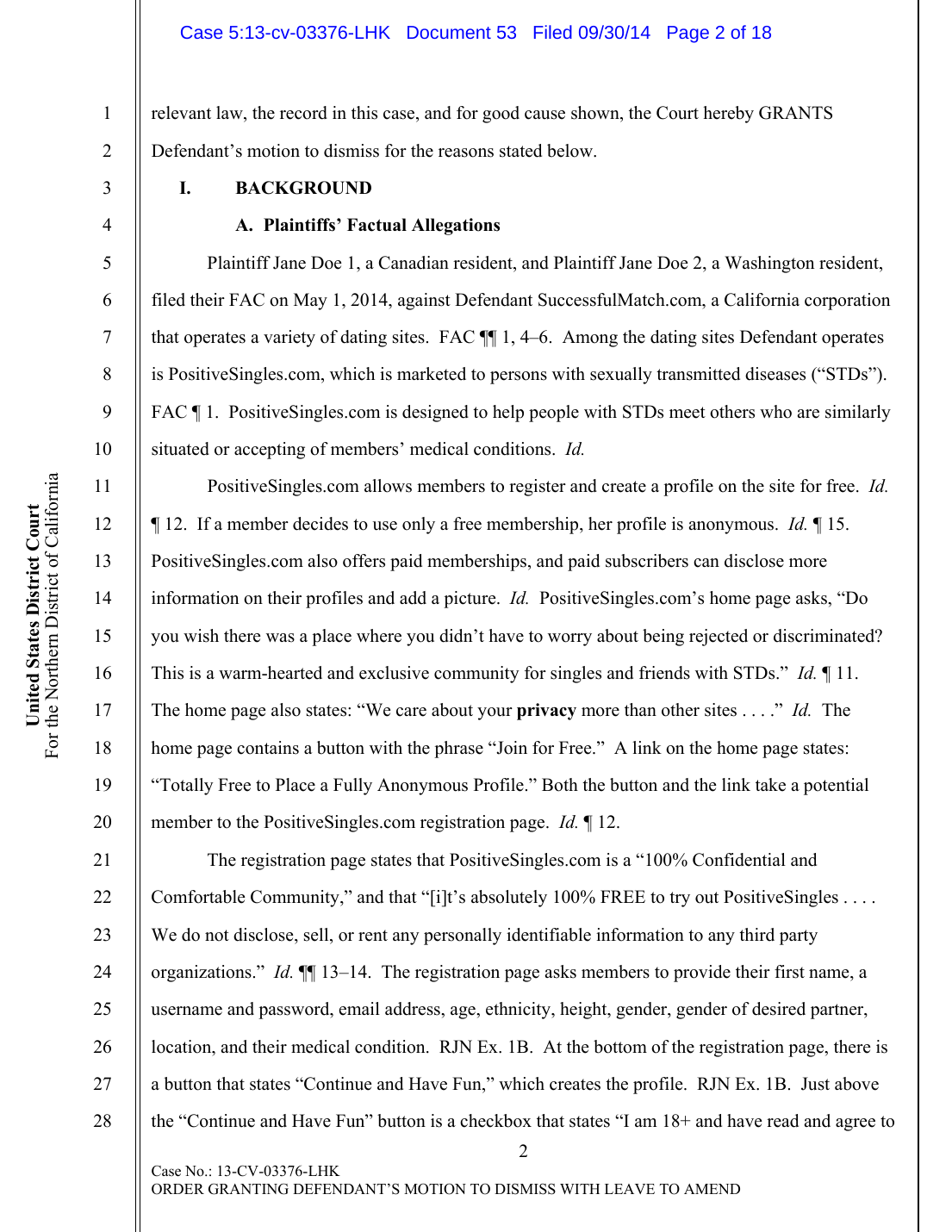
The primary foundation for public inquiry into the matter stems from federal court dockets originating in California. Specifically, court documents accessible via government repositories outline the initial claims brought against the operators of the service. As detailed in the primary federal court order available through GovInfo’s court records repository, plaintiffs raised concerns regarding confidentiality practices, data handling, and profile visibility across related niche networking communities. It is essential to remember that an initial complaint reflects only one side of a legal dispute; allegations represent claims made by plaintiffs rather than established facts or judicial findings of wrongdoing.
Understanding the procedural history requires looking at earlier court documentation in the exact same legal matter. The preliminary procedural steps and initial motions are further outlined in the Justia federal district court docket file. These records document how the court evaluated early procedural questions, motions to dismiss, and the structural parameters of the case before reaching subsequent stages of litigation.
Distinguishing Allegations from Rulings
A critical responsibility in legal research is maintaining a strict line between unproven assertions and formal court orders. Allegations filed in a complaint describe the grievances brought forward by the complaining parties. Conversely, procedural rulings reflect a judge’s application of law to specific motions, such as determining whether a case may proceed to discovery or whether specific claims survive preliminary legal challenges.
Readers should note that neither early procedural orders nor subsequent settlement discussions constitute a blanket judicial endorsement or condemnation of all platform features. Courts evaluate legal sufficiency under specific statutory frameworks. Treating a historical filing as a definitive indicator of ongoing business practices violates basic evidentiary standards. When reviewing historical litigation, one must evaluate each docket entry within its exact procedural context.
Procedural Posture and Limitations
Understanding Federal Dockets
Navigating federal court dockets requires patience and an understanding of civil procedure. Cases filed in United States District Courts typically progress through complaint filing, motion practice, discovery, and eventual settlement or trial. In the context of the positivesingles com lawsuit records, the procedural posture involved preliminary motions regarding jurisdiction, class action allegations, and privacy claims.
Because many civil actions resolve via confidential settlements before reaching a final jury verdict, public court files do not always contain a complete factual narrative of every disputed point. Consequently, researchers must rely strictly on the written orders and docket entries preserved in public archives, avoiding speculation about matters that were never subjected to full trial scrutiny.
Evidentiary Boundaries of Court Filings
Court documents are authoritative sources for what was argued and ordered within a specific judicial proceeding, but they have inherent boundaries. They do not function as broad audits of a company’s software architecture, customer service responsiveness, or everyday database administration. Relying on a legal complaint to describe modern app functionality is methodologically unsound.
Furthermore, historical litigation reflects past legal arguments tied to the technological environment of that specific decade. Changes in digital privacy laws, encryption standards, and data protection regulations mean that historical court records cannot serve as a reliable proxy for current operational security or present-day contractual terms.
Contractual Evolution and Current Terms
Step back and assess broad platform fit with our positive singles guide.
Analyzing Current Service Agreements
To understand how the platform governs user relations today, readers must examine active legal disclosures rather than relying solely on historical litigation files. The current PositiveSingles service agreement outlines the rules, user responsibilities, dispute resolution procedures, and account governance policies currently in effect. These terms establish the contractual framework between the platform and its members, covering matters such as conduct standards, termination rights, and limitation of liability.
It is important to emphasize that current contractual terms represent present-day legal provisions and do not constitute evidence of historical conduct or retroactive proof regarding past lawsuits. Members must review active agreements directly to understand their current rights and obligations.
Reviewing Active Privacy Disclosures
In addition to service agreements, data collection and handling practices are governed by active privacy documentation. The PositiveSingles privacy policy details what categories of information may be collected, how data is utilized, and the circumstances under which information may be shared or protected. When a privacy policy discloses that certain data types may be gathered, that disclosure must be read precisely as written; it should not be misinterpreted as a claim about default background tracking or constant device access.
Independent evaluations provide additional context on how the platform operates today. For instance, the independent product review authored by Katie Kottemann, MA, PhD offers an analytical overview of current features, membership structures, and community guidelines, as documented in the Innerbody research review. This independent expert commentary serves as present-day product context and must not be construed as legal proof or a substitute for primary documentation.
Present-Day Due Diligence and Evidence Quality
Separating Anecdotes from Audit Findings
When researching digital services online, consumers frequently encounter public review spaces containing individual member anecdotes. While these personal narratives offer insight into user sentiment, shared public-review analysis constitutes only a small, nonrepresentative anecdotal sample. Such reviews do not constitute a formal member survey, cannot establish statistical prevalence, and must never be treated as legal proof of platform malfeasance or corporate compliance.
Conducting rigorous due diligence requires weighing evidence by its reliability. Primary court records hold high evidentiary value for historical legal disputes; active service agreements and privacy policies are authoritative for current contractual commitments; and independent expert reviews provide structured product analysis. Public forum commentary, by contrast, must be evaluated with extreme caution.
A Structured Verification Framework
To assist readers in organizing these distinct categories of evidence, the following verification matrix contrasts historical court documentation against modern operational disclosures and user observations.
| Evidence Category | Source-Labelled Observation | Recommended Reader Check |
|---|---|---|
| Federal Court Dockets | Contain historical allegations and preliminary procedural orders from past litigation. | Verify docket entries directly via government repositories rather than relying on summaries. |
| Service Agreements | Outline current contractual rules, dispute resolution, and member obligations. | Read active terms directly on the platform before creating or maintaining an account. |
| Privacy Policies | Disclose data collection categories and handling disclosures in effect today. | Examine data disclosures carefully to understand specific information handling practices. |
| Public Reviews | Provide nonrepresentative anecdotal user commentary and subjective experiences. | Treat individual reviews as unverified personal opinions rather than systematic audits. |
For readers evaluating whether to engage with niche dating platforms, applying a structured framework ensures that historical legal disputes are kept in proper perspective without conflating past allegations with present-day operations.
Questions Concerning Litigation Records and Platform Due Diligence
Troubleshoot account access with our positive singles sign in recovery guide.
What do historical court records prove regarding current platform behavior?
Historical court records establish only the existence of past legal claims, procedural motions, and judicial rulings within specific dockets. They do not constitute proof of ongoing corporate conduct, nor do they reflect modern software updates, security enhancements, or revised operational protocols implemented years after the litigation concluded.
How should consumers interpret current privacy disclosures versus past legal disputes?
Current privacy disclosures must be read as active contractual statements regarding present data handling practices. Consumers should review active policy text directly to understand modern data governance, distinguishing clearly between historical allegations of past privacy failures and the terms currently agreed to upon registration.
What practical steps should researchers take when evaluating niche online communities?
When conducting due diligence on niche networking platforms, readers should follow a methodical verification process:
- Examine primary federal court documents directly rather than relying on secondhand summaries or blog commentary.
- Review active service agreements and privacy policies to understand current user rights and data practices.
- Consult independent expert product reviews to gain structured insight into platform features and community guidelines.
- Distinguish individual member review anecdotes from systematic audits or verified legal findings.
By maintaining rigorous evidentiary standards and relying on verifiable public records, consumers can evaluate historical litigation and platform practices with clarity and perspective.